The weekly trading meeting
What should be on a weekly trading meeting agenda?
Sales against plan and last year, best and worst sellers, stock and orders, then decisions with owners and deadlines, and a check on last week’s actions.
The weekly trading meeting
The weekly trading meeting is where a retailer’s buyers, planners and merchandisers review last week’s sales, stock and margin by product, decide what to change, and check last week’s changes worked. Also called the weekly business review, the Monday meeting or the trade meeting. The best ones end every decision with an owner and a deadline, and rank products by gross profit, not just units.
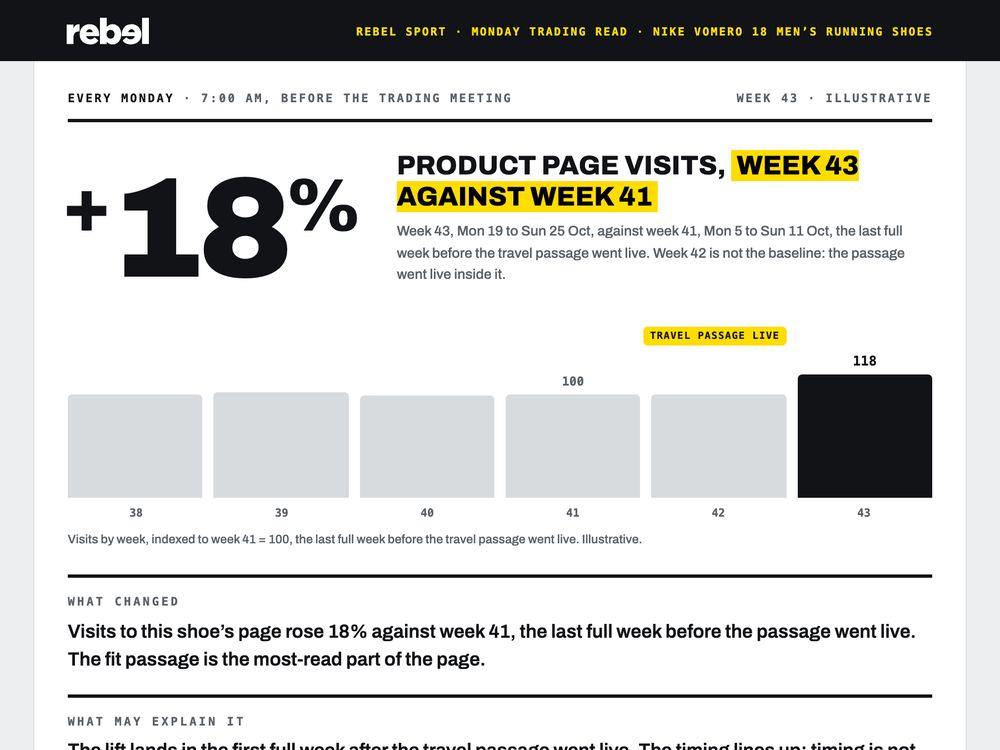
A short meeting, usually Monday morning, that turns last week’s numbers into this week’s actions. It has many names, depending on where you trade.
The Australian and UK name. Buyers say they are “trading the business”.
The US corporate name, often shortened to WBR.
The Monday recap of top and bottom sellers, ranked by sell-through.
The daily and weekly reports that feed it: sales against budget and last year.
Last week, month to date and year to date, against budget and last year, in dollars and units. Then the reasons.
Rank products by gross profit and sell-through, not only units. Flag slow sellers with high stock.
Weeks of cover, what is on order, what to reorder and what to clear.
Units tell you what happened. Ask why: the page, the shelf, the season, the price, the competitor.
Every decision ends with an action, an owner, a deadline and the result you expect.
Did the changes happen, and did they work? Keep gaps visible until they close.
Sales, stock and margin by product, from the systems you already use.
Why each product sold or stalled: the page, the season, the shopper, the competitor.
The changes that add the most gross profit, with the work already made: new page, new ticket, new ad.
The pre-read is in your inbox before the meeting. You decide; SalesChef does the work.
The sales, stock and accounting systems your planners already report from.
See every integration SAP
 NetSuite
 Odoo
 Xero
 Shopify
 Google Analytics 4
 Power BI
 Looker
Sales against plan and last year, best and worst sellers, stock and orders, then decisions with owners and deadlines, and a check on last week’s actions.
Sales against budget and last year, comp sales, sell-through, gross margin, stock on hand, weeks of cover, markdown mix and aged stock.
The trading meeting and the WBR are weekly and decide this week’s actions. A range review is usually quarterly or yearly and decides which products to carry.
A daily or weekly report of sales against budget and last year. It is usually the first number checked each morning and feeds the trading meeting.
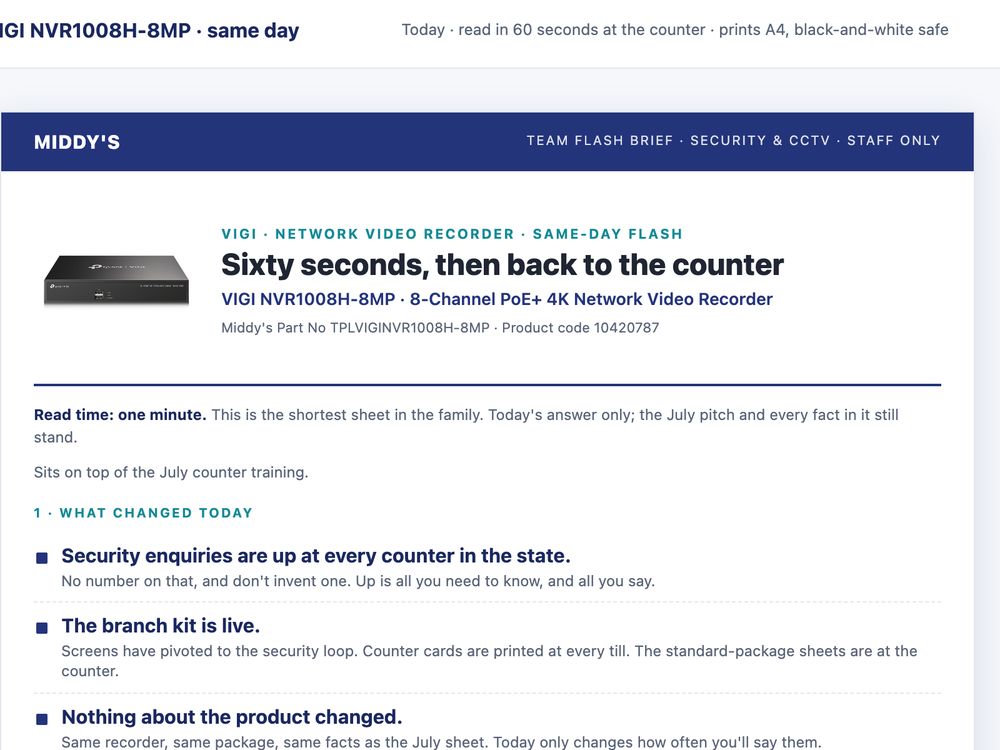
Send the numbers before the meeting and spend the time on decisions. Every item ends with an action, an owner and a deadline.
Every Monday SalesChef sends the next best moves, ranked by gross profit, with the work for each already made, so the meeting is about deciding, not digging.
A wall of products already finished. Each one turns from what the supplier sent into a finished product, ready for online, in store, sales and campaigns.