Here’s how SalesChef handles it, shown on a set of pieces made for L’Oréal Paris.
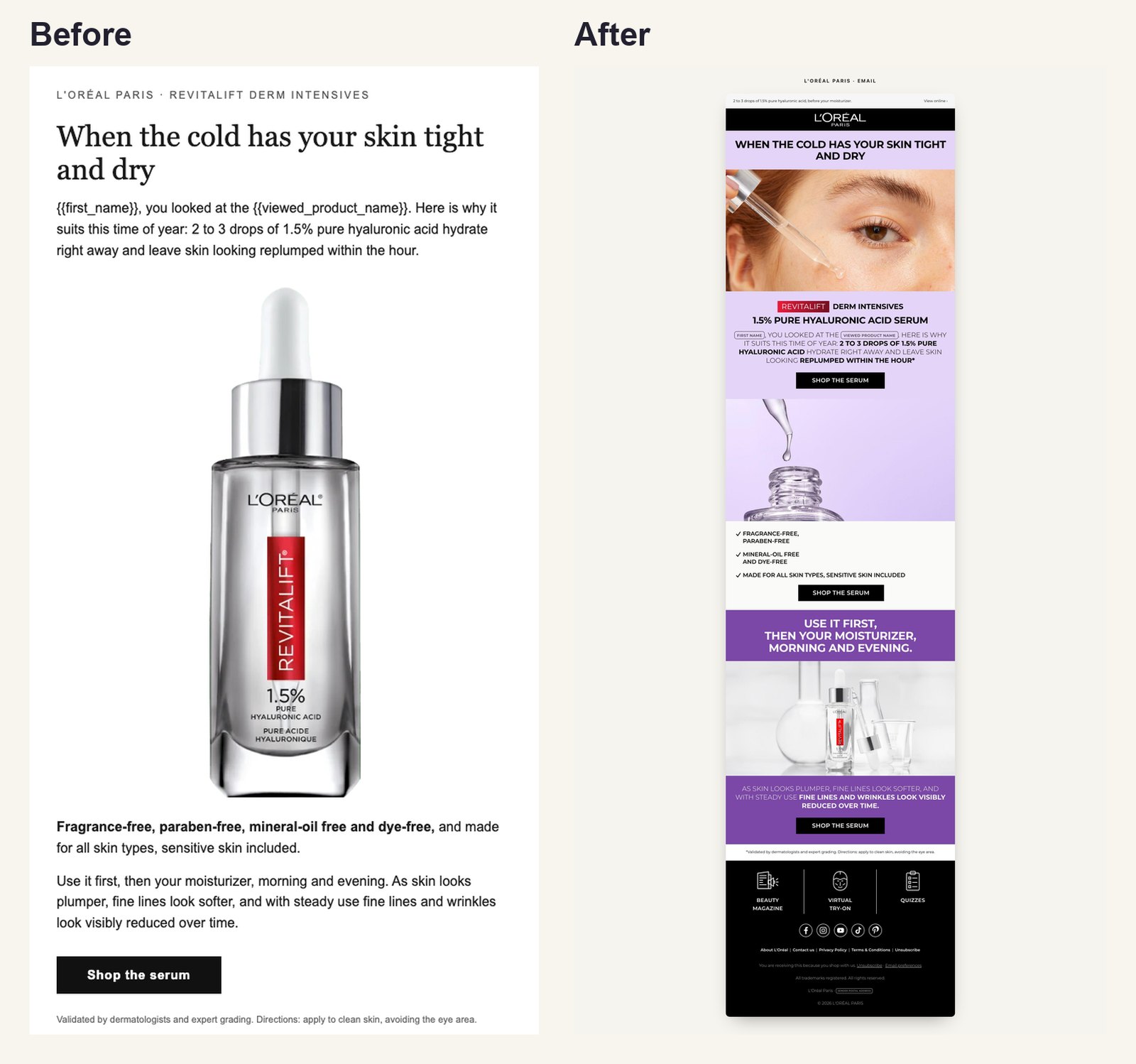
The first version was tasteful, and wrong. SalesChef started from what was on file: a dark gray for text, a champagne gold, a quiet “luxury” feel. The result was elegant. It wasn’t L’Oréal Paris.
So SalesChef read the brand’s real work. More than a hundred pieces L’Oréal Paris has published in the US: its website, its newest emails, its Amazon listing, its shelves and its social posts. SalesChef measured the colors on the live site and copied every line word for word, and found what no file had said:
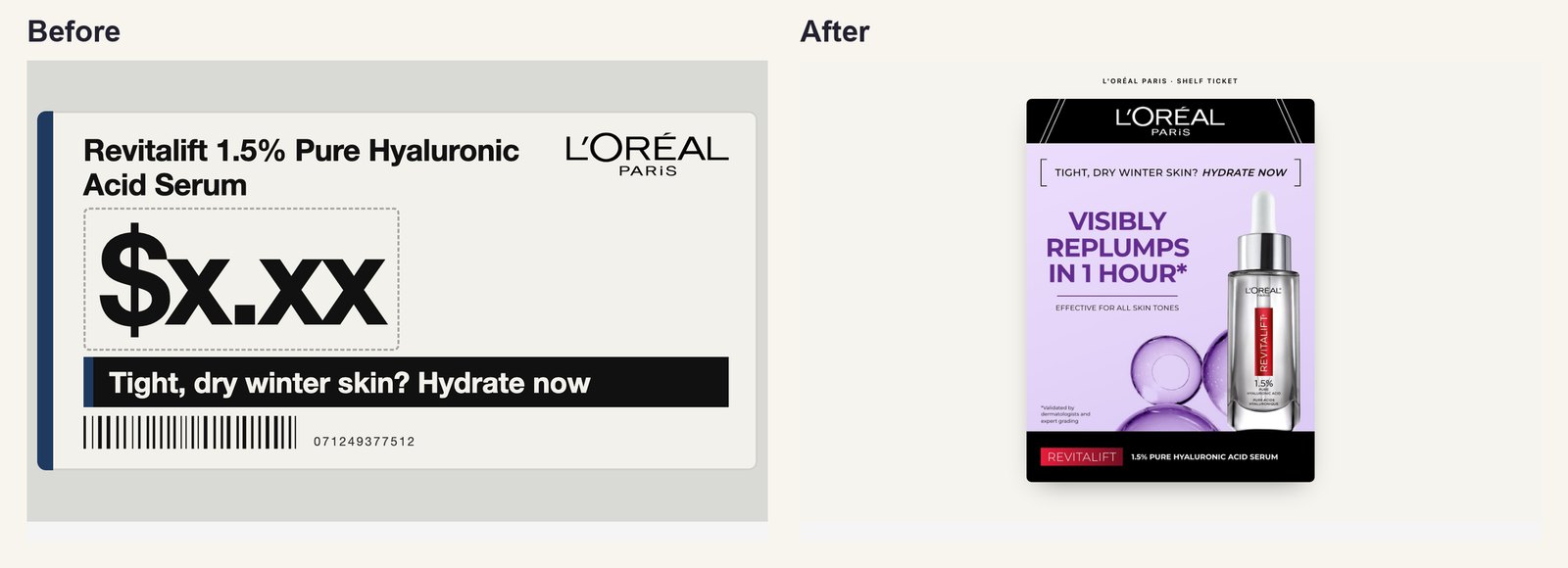
- The text is pure black, not gray, and the gold appears only on small legal links. This serum wears lilac and purple, not the red of the website.
- Email uses a different typeface from the website. Headlines run about four words, mostly bold capitals, and every claim carries an asterisk with its footnote on the same image.
- The product does the verb (“visibly replumps”, “absorbs quickly”), and “you” is rare in the selling lines.
Then every piece was made from its own channel’s examples. The email was made beside real L’Oréal Paris emails, the shelf ticket beside real L’Oréal Paris shelves, the Amazon listing beside its real listing. Each channel keeps its own look, because the brand does.
See every piece, live: demo.saleschef.ai/loreal_usa/walkthrough/ (opens in a new tab)
What this means for your brand. Guidelines help, and SalesChef uses yours. But guidelines are often out of date, written for one channel, or never published at all. Your brand lives in what you actually ship. SalesChef learns from that, checks every piece against it, and carries each change you approve into the next one.